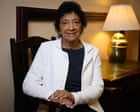
The Norwegian Nobel Committee awarded the 2024 Nobel Peace Prize to Navi Pillay, the South African judge at the International Court of Justice, citing her work advancing international law and human rights.
The committee recognized Pillay's long career defending universal legal principles. She served as UN high commissioner for human rights and chaired the UN independent international commission of inquiry on the occupied Palestinian territory. That commission concluded in September 2023 that Israel was guilty of genocidal acts in Gaza "with the specific intent to destroy Palestinians in Gaza" and said Israeli Prime Minister Benjamin Netanyahu, President Isaac Herzog, and former Defence Minister Yoav Gallant had "incited the commission of genocide."
Pillay, 85, stated when the commission published its findings: "It is clear that there is an intent to destroy the Palestinians in Gaza through acts that meet the criteria set forth in the genocide convention."
Israel rejected the report as "scandalous" and argued the commission was biased. The Israeli Foreign Ministry issued a statement on Friday calling the award "the grotesque weaponization of an award to legitimize anti-Israel hatred and prejudice" and comparing Pillay's work to fabrications attributed to Nazi propagandist Joseph Goebbels.
The Norwegian Nobel Committee said Pillay's "independence, expertise and steadfastness have made her one of the most respected international jurists of our time." The committee noted her early work defending Nelson Mandela during South Africa's apartheid regime and her service on the international criminal tribunal and as UN high rights commissioner.
Pillay was attending a meeting of human rights lawyers in Nuremberg, Germany when she learned of the award. She responded with skepticism, saying: "The question is: is it true? Being a lawyer and a judge, I still want to verify it."
South African President Cyril Ramaphosa welcomed the prize. South Africa has produced four previous Nobel Peace laureates.
Hours after the announcement, the Trump administration imposed broad sanctions against the International Criminal Court, which Pillay once served on. US Secretary of State Marco Rubio stated the measures aimed to ensure the court would not prosecute Americans. The ICC responded that the sanctions constituted "an assault on the rule of law and on the very foundations of the international legal order."