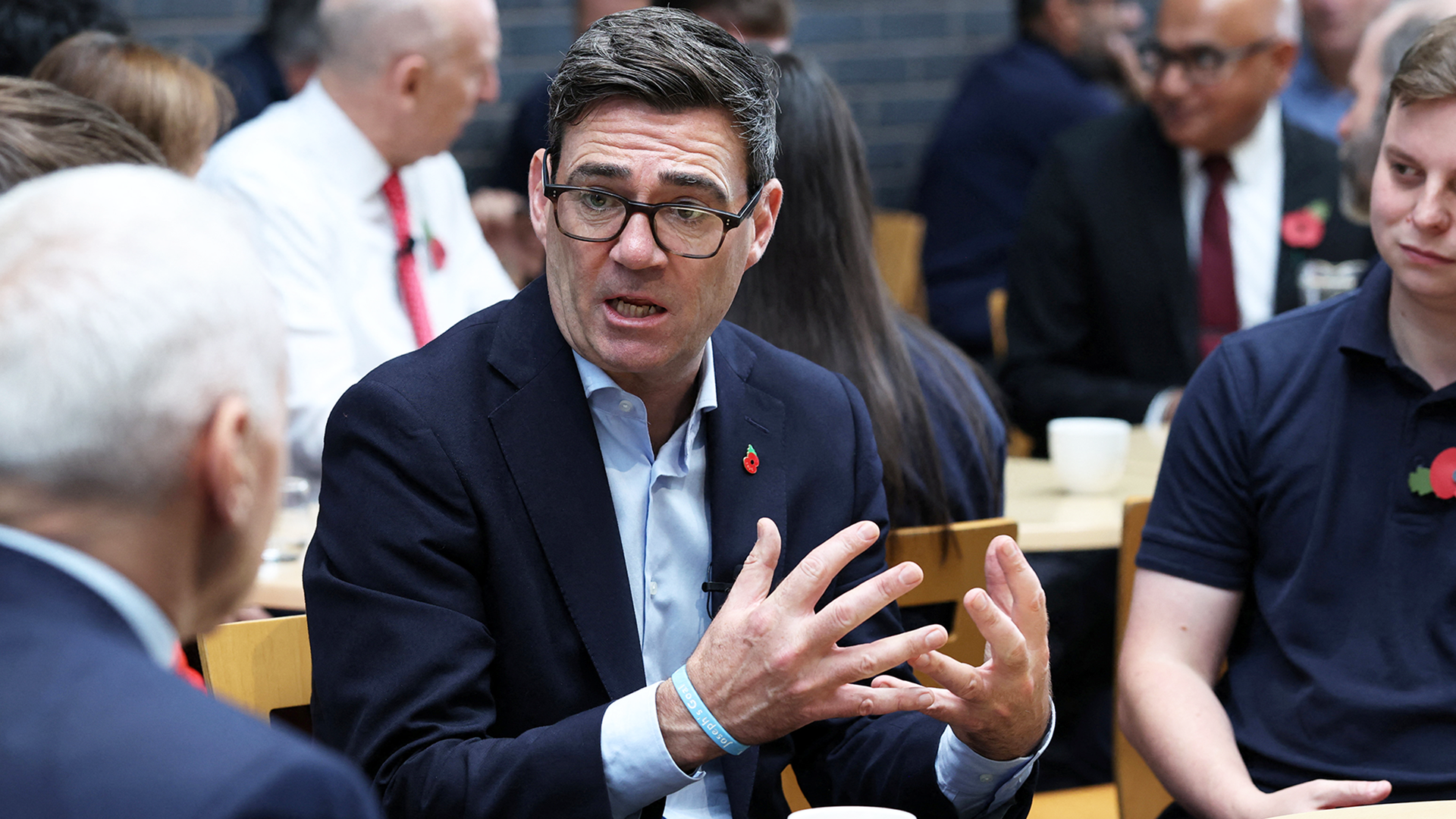
Andy Burnham said he wants to cut the welfare bill "as soon as we possibly can," but he did not guarantee the cut would happen before the next general election.
Asked whether he would reduce the bill before the next election, Burnham told reporters: "We want to get the welfare bill down as quickly as possible, and we're working flat out to that end." He warned against "crude cuts" and said the government wants people in "sustainable employment."
The Treasury disputed that Chancellor John Healey had suggested the benefits bill will be cut before the next election, which must be held by August 2029. Healey had told the Today Programme on Radio 4: "There will be, there will be a reduction in the benefits bill, we'll do that in a Labour way." Several Treasury sources disputed reading this as a promise to act before the next election. Downing Street said it was "not setting an arbitrary target or timetable." The prime minister's official spokesman would not say whether the aim means reducing spending below its current level or slowing its projected rise.
The Office for Budget Responsibility forecasts welfare spending will rise this year by £19bn to £353bn, and reach £431bn in 2031/32. The forecast attributes the growth mainly to health-related and pensioner benefits. Of the 2031/32 figure, £209.8bn is for pensioners, £110.7bn for universal credit and legacy equivalents, and £69.6bn for disability benefits such as personal independence payments.
Further details are expected after two reports due in November: a review of disability benefits co-chaired by Labour minister Sir Stephen Timms, and a review of young people not in education, employment or training led by Alan Milburn. Burnham called the Milburn report the "big next priority."
The Conservatives accused Labour of being "addicted to welfare." Kemi Badenoch said the Budget did "so little" and had "harmed our economic security and... national security." Former Bank of England chief economist Andy Haldane said a plan showing "greater restraint" of the benefits bill would "play spectacularly well" with financial markets.