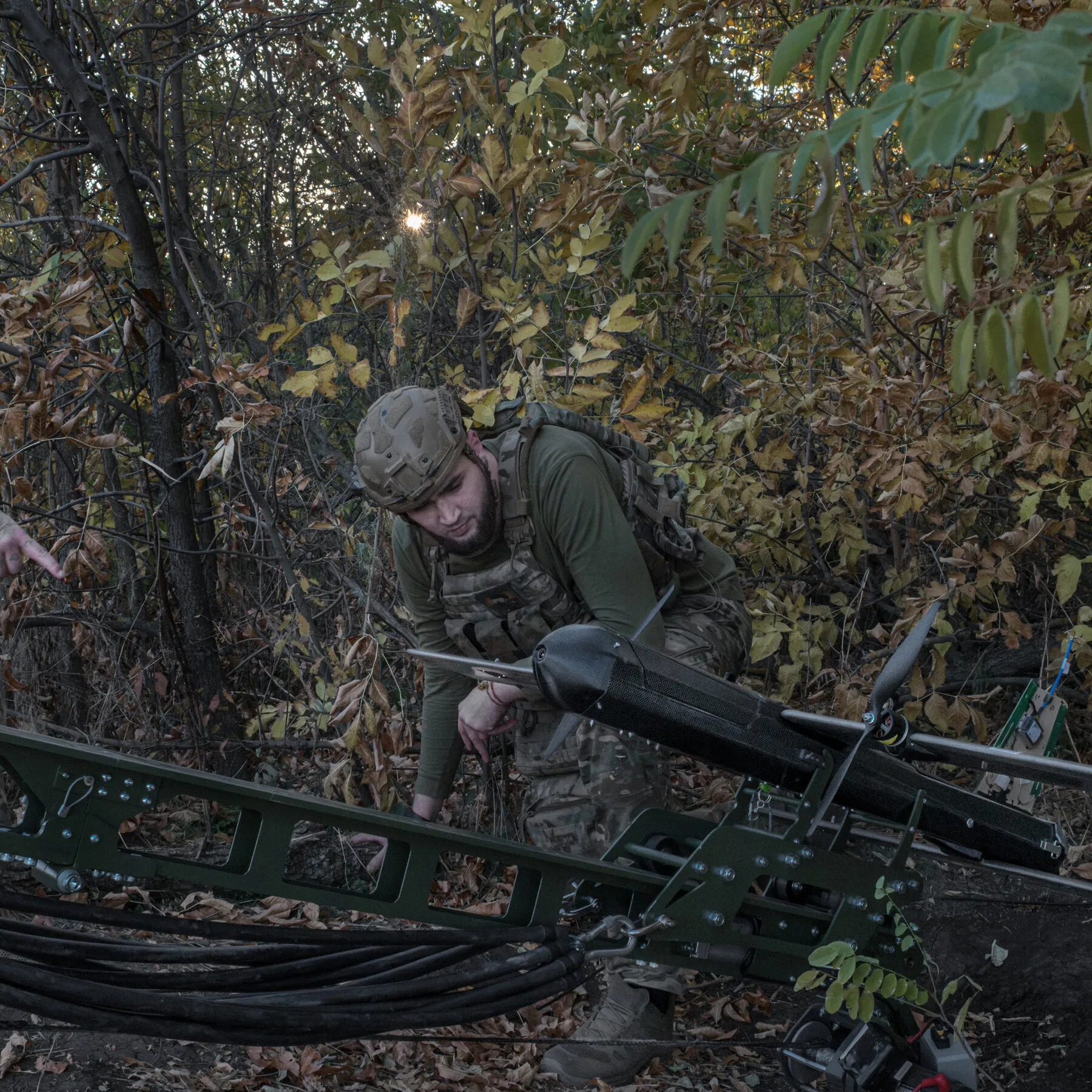
The Ukrainian government has opened a trove of five million battlefield videos to defense companies at home and abroad. According to the report, the material includes video, audio and text collected over nearly five years of war, and it is being used by about 30 Ukrainian defense companies to develop A.I. weapons. Ukraine calls the repository Avenger Labs, and it is now offering access to firms in allied countries.
The report describes a striking example of what this data can do. A drone camera filmed a forest that looked, to the human eye, deserted, a landscape of black tree trunks, shadows and patches of snow. An A.I. system nonetheless drew a red box around a tiny human form, probably a soldier. The report makes the point that such capability depends on exposure to how humans actually fight, just as chatbots depend on exposure to how humans write.
The fairness of this arrangement deserves more scrutiny than the enthusiasm around it. Ukraine is providing the data at no charge, but companies must grant the Ukrainian military licenses to any software they develop. The first agreement, the report says, gives access to 12 British defense companies, and talks with other countries are continuing. Those licensing terms are the most important detail in the piece, because they determine who ultimately controls the tools built from a war that Ukrainians have paid for in lives.
The report notes that Western companies building autonomous weapons are not short of engineering talent, but they are short of the data needed to train those systems. That gap is why Ukraine holds such leverage. Partners should be expected to pay in ways that matter, including clear rules on how military A.I. trained on this material may be used, and transparency about who reviews those decisions.
Ukraine's government should set those conditions in writing before more agreements are signed. Allied governments should accept them as the cost of access. Deepening security partnerships is a legitimate goal, but it should not mean that a country under attack hands over the raw material of its war and receives little say in what is built from it.