Myanmar has been found guilty of committing genocide against its Rohingya minority, the International Court of Justice (ICJ) ruled on Thursday. The court said it was the first time an international court had found a state responsible for genocide.
ICJ President Yuji Iwasawa said Myanmar had the "intention to destroy" a substantial part of the Rohingya population. He said Myanmar engaged in "extensive destruction of evidence" to hide its crimes. The court found "genocidal intent is the only reasonable inference that can be drawn from the evidence" it had seen.
The verdict passed by a majority of nine votes to six. The court also found by majority that Myanmar violated several other parts of the 1948 Genocide Convention.
The case was brought by The Gambia. It centred on "clearance operations" begun in 2017 in Rakhine State, after fighters from the Arakan Rohingya Salvation Army (Arsa) attacked more than 30 police posts. The ICJ said around 10,000 Rohingya were "violently killed" during the operations, and more than 700,000 fled to Bangladesh. The court found that approximately 815,000 had been targeted in some way.
Iwasawa said Myanmar's military carried out "indiscriminate" killings, executions, "widespread" sexual violence, "extreme violence" against children, and the deliberate burning of Rohingya homes. He said the military also attacked Rohingya fleeing to Bangladesh.
The court found that policies such as limiting married couples to two children were discriminatory and aimed to erode Rohingya rights. It ruled that Myanmar must pay proportionate reparations, with an exact figure to be set later.
Myanmar has consistently denied genocide. It says its operations targeted militant or insurgent threats in response to the Arsa attacks. Government representative Ko Ko Hlaing said he had "no comment" after the verdict.
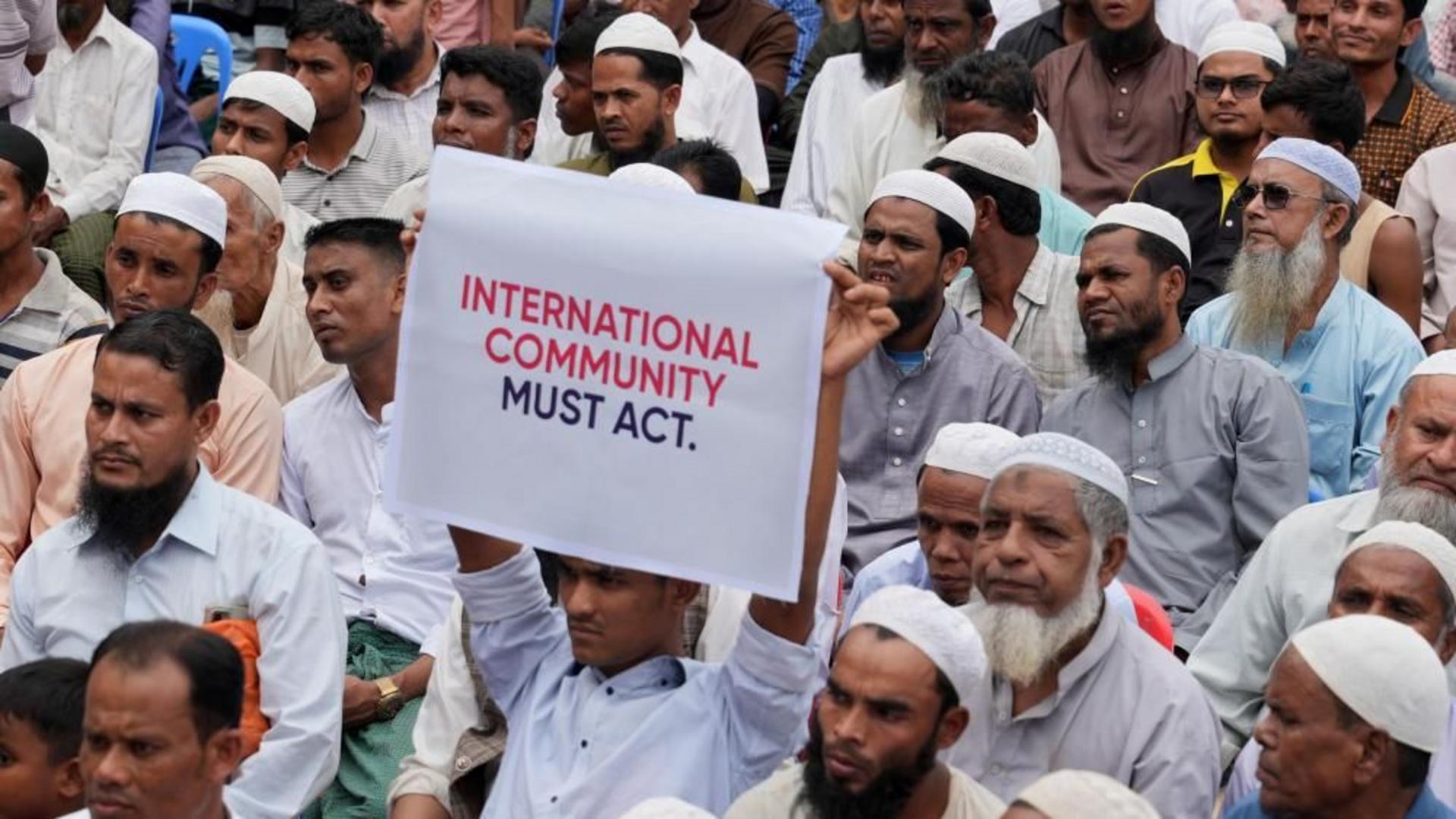
Rohingya communities and human rights groups welcomed the ruling. Mohammed Nowkim, a Rohingya who fled Rakhine in 2017 and now lives in Canada, said it was "formal recognition of our suffering." UN human rights chief Volker Türk said the decision "must now translate into real action."
The ICJ cannot imprison military officials, and it relies on the UN Security Council and political pressure to enforce its rulings. The ruling will also affect other pending genocide cases before the court, including one brought by South Africa.